NEUR 211 — Neuroscience I (3)
introduction to the Biological basis of behavior. emphasis is
placed on an understanding of the neural substrates that underlie
human behavior. Topics include neuroanatomy and neural
communication; alterations in neurochemistry due to drug
interactions; sensation and perception; movement and disorders of
movement; Biology of mood disorders, schizophrenia, and autism.
NEUR 212 — Neuroscience II (3)
Topics include regulations of internal body states; hormones
and behavior; emotional behavior and stress; neural substrates of
learning and memory, including pathologies associated with
dementia; Biological basis of language; introduction to human
neuropsychology. This course includes the Neuroscience
Program’s sophomore/junior diagnostic project. Students will
present a written and oral report on an area of nervous system
pathology. Prerequisite: NEUR 211.
NEUR 300 — Research Experience (1 to 3)
An opportunity for a student to engage in faculty-directed
research in Neuroscience. Sophomore standing required and
permission of a supervising department faculty member are required
for the full 3-credit option. Students who have not obtained junior
status
may earn 1 or 2 credits. each credit hour represents a
three-hour commitment per week. Prerequisite/co-requisite: NEUR
211
NEUR 310 — Research Methods in Neuroscience
(3)
This course is designed to familiarize the student with
current research methods in Neuroscience as a preliminary step in
designing an individual research project. emphasis will be placed
on experimental design, data collection and analysis of results,
and the use of APA format in reporting research. Students will
choose an area of investigation, complete a literature review of
the topic, and design a research project to be completed in the
final semester of their senior year. To be taken in the fall
semester of the senior year.
NEUR 341 — Neuroanatomy (3)
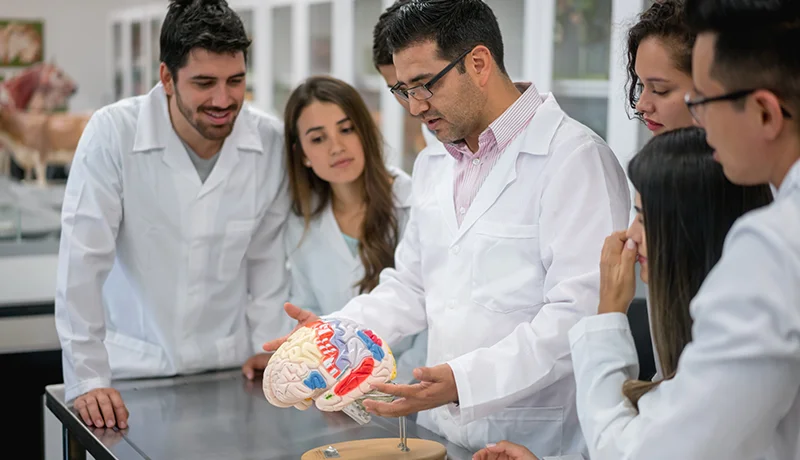
The neuroanatomy course provides a broad overview of the
structure and function of the central nervous system, with a
principal focus on issues relevant to clinical neurology. Students
will learn to identify the major features of the brain and spinal
cord and to understand the structural and functional relationships
between these structures and to apply this knowledge to the
clinical situation.
NEUR 342 — Drugs and Behavior (3)
drug abuse is our nation’s number one health and social
problem. in this course, we will examine the use and abuse of drugs
from many perspectives: social, legal, medical, pharmacological and
psychological. Beginning with a basic coverage of how the brain
controls behavior, we will look at how drugs interact with the
brain to have such powerful effects on behavior. Topics will
include the medical use of drugs (including over-the-counter and
psycho-therapeutic drugs), the illegal abuse of drugs like heroin
and cocaine, and the use and abuse of non-drugs like caffeine,
nicotine and alcohol. Cross-listed as PSYC 342.
NEUR 345 — Biology of Mental Illness (3)
This course is designed to give the student an understanding
of the various theories that focus on the Biological causes of a
number of mental illnesses including: major depression, bipolar
disorder, anxiety disorders, and schizophrenia. A major part of the
course will be focused on how the current medications work and what
we can learn about the possible cause of the illness based on this
information. Cross-listed as PSYC 345.
NEUR 346 — Psychopharmacology (3)
This course surveys what is currently known about the
neurobiology of psychiatric disorders and the use of psychoactive
drugs to treat them. Starting with the basics of the brain/
behavior relationship and principles of pharmacology, we will cover
the symptoms and treatment of the affective disorders, anxiety
disorders and the schizophrenias, among others. Also included will
be the psychological aspects and pharmacotherapy of the
neurodegenerative disorders like Parkinson’s disease,
Huntington’s chorea and Alzheimer’s disease.
Cross-listed as PSYC 346.
NEUR 348 — Sensation and Perception (3)
This course deals with how we construct a conception of
physical reality from sensory experience. While the primary focus
will be on vision and hearing, the chemical senses
(taste and smell) the somatosenses (touch, temperature and
vibration) will also be ad- dressed. We will cover the anatomy and
physiology of the various sensory receptors, the neural mechanisms
of sensation, sensory representation in the brain, as well as the
phenomenological experience of perception. Topics will include the
ways in which illusions can fool our senses and what they tell us
about how our sensory systems work. Cross-listed as PSYC 348.
NEUR 349 — Animal Behavior (4)
The study of behavior has become complex, requiring knowledge
in more than one discipline. in this class students will learn
about animal behavior from a physiological, developmental,
functional, and evolutionary perspective. Areas of concentration
will include behavioral genetics, communication, behavioral
endocrinology, altruism, neurobiology, social behavior, sexual
behavior, parental care, and human behavior. Lab activities will
include both laboratory study and field work. Cross-listed as BIOL
349 and PSYC 349.
NEUR 390 — Special Topics in Neuroscience
(3)
A course offered periodically, in an area of expertise by a
member of the Neuroscience faculty. The course will concentrate on
a topical area such as the neural substrates of learning and
memory, neurodegenerative disorders, and neuropsychology. Junior
standing. Prerequisite: NEUR 212.
NEUR 395 — Supervised Readings (3)
A course designed for students who want to review
psychological literature in an area of their choice, under the
supervision of a neuroscience faculty member. Generally, this will
allow students to either become more familiar with an area covered
in existing courses; or explore fields of neuroscience that are not
part of existing curricula. This course is not designed as a
substitute for taking of existing courses in the regular manner.
Pass/Fail option may be required at the discretion of the
instructor. Prerequisites: Junior standing and 12 credits in
Neuroscience or permission of the department.
NEUR 430 — Independent Research (3)
An opportunity for a student to engage in independent
research in a specific area of Neuroscience. Junior or senior
status required, and permission of a supervising department faculty
member. Prerequisites: NEUR 212.
NEUR 480 — Senior Seminar (3)
The senior seminar is the Neuroscience Program’s Senior
integrated Assessment course. Students will engage in original
research in a specific area of Neuroscience. The research project
will be under the direction of a faculty member, and will include a
written thesis and oral presentation. To be taken in the spring
semester of the senior year.
NEUR 490 — Advanced Neuroscience Research (3)
Students will engage in research under the direction of a faculty member, and will include a thesis and oral presentation. Normally taken in the spring semester of the junior year or in the senior year.
NEUR 499 — Neuroscience Internship
Approval of the psychology department chair is required. A
minimum G.P.A. of 2.40 is required.