Mechanical Engineering Degree
Program Overview
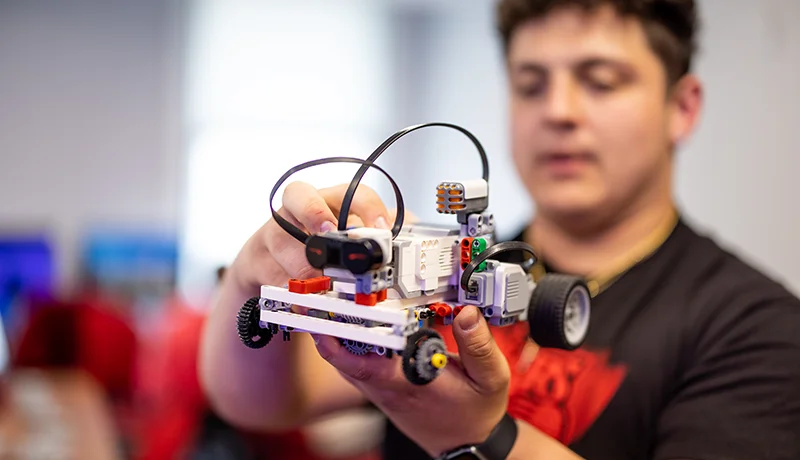
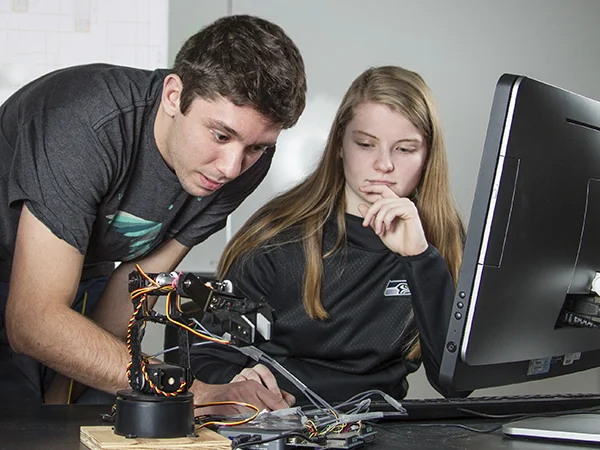
You'll use creative design throughout your time as a mechanical engineering major at King's College in Wilkes-Barre, Pa., from your first semester all the way to your final capstone project when you build a machine for an actual client. You could come up with a device that factory workers use to move heavy metals, a machine that controls flow for manufacturing particles, or even build a robot that uses ultrasound to navigate autonomously.
Faculty at King’s make this possible by working closely with students in small classes, where they help to match your talents and passions with exciting opportunities in the real world. The mechanical engineering curriculum is driven by the insights of industry partners that understand the importance of creativity, practical thinking, and professional skills, like teamwork and communication.
What is mechanical engineering?
Mechanical engineers use physics and math principles to design machines that help people. From the steam engines that powered the industrial revolution to the steam turbines that generate most of the electricity in the United States, engineers make better use of energy by designing more efficient tools, buildings, and vehicles.
Mechanical engineers design hip implants for the elderly, toys for kids, and kitchen utensils for people with disabilities. They design and power machines that manufacture millions of products around the world. Whether it's surgery, cleaning, manufacturing, or space exploration, mechanical engineers design machines in just about every industry.
Program Details
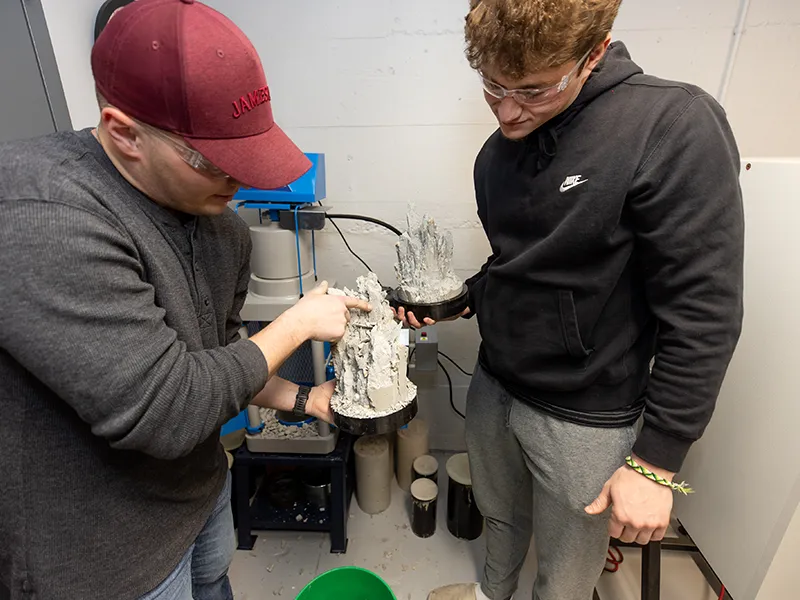
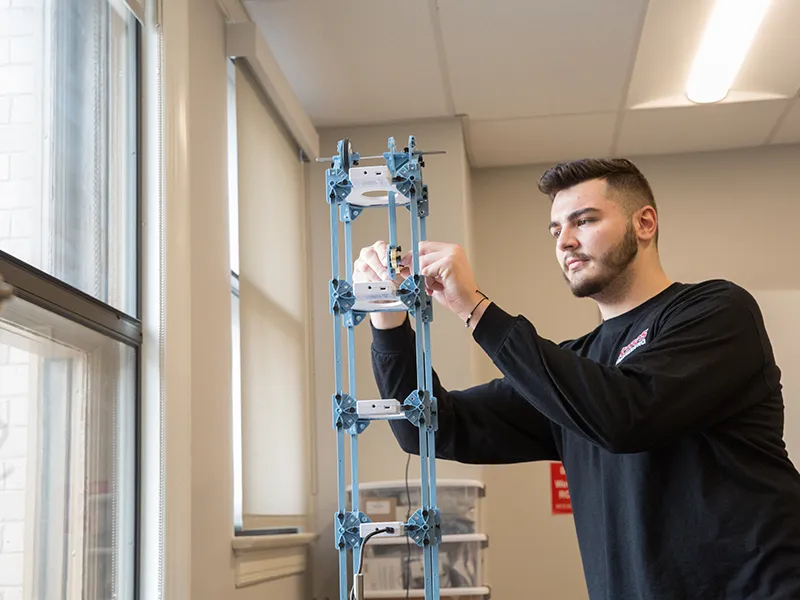
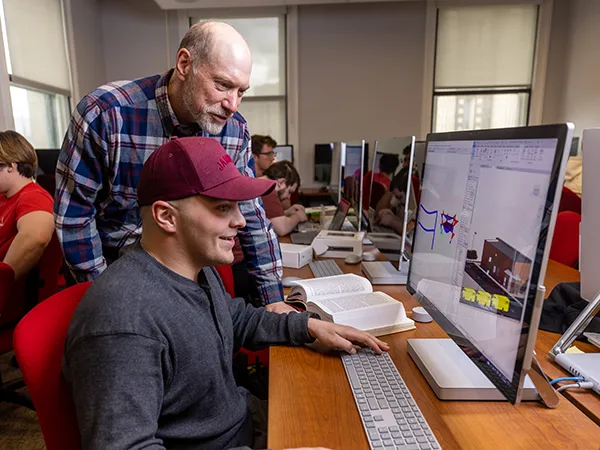
In our mechanical engineering program, most of the mechanical engineering courses include hands-on experience, where you'll solve complex, open-ended problems using the same tools that engineers use on the job. Some of these tools include:
- CAD and simulation software
- Codes and standards
- Rapid prototyping
- Machining equipment
King's College’s Bachelor of Science in Mechanical Engineering program is accredited by the Engineering Accreditation Commission of ABET. The mechanical engineering program’s curriculum is taught at the brand new, state-of-the-art Mulligan Center for Engineering in Wilkes-Barre, Pennsylvania, which houses four large multi-use classrooms, student study areas, faculty offices, and five fully equipped engineering laboratories. King's is one of the few private Catholic mechanical engineering schools with both an ABET-accredited engineering program and an AACSB-accredited business program.
Mechanical Engineering Degree Objectives
Within a few years of graduation, King's students with a mechanical engineering major are expected to:
- Complete engineering projects by using technical knowledge, working independently and as a member of a team, taking responsibility, communicating, and demonstrating leadership.
- Recognize how their responsibilities fit into their organization and take initiative to support the broader organization.
- Grow professionally and engage in life-long learning by completing graduate degrees or pursuing other training, obtaining licensure or certifications, and receiving guidance from mentors.
- Act as citizen-engineers by living and working ethically with concern for society and the environment.
Mechanical Engineering Degree Student Outcomes
Our mechanical engineering college graduates should be able to:
- Identify, formulate, and solve complex engineering problems by applying principles of engineering, science, and mathematics.
- Apply engineering design to produce solutions that meet specified needs with consideration of public health, safety, and welfare, as well as global, cultural, social, environmental, and economic factors.
- Communicate effectively with a range of audiences.
- Recognize ethical and professional responsibilities in engineering situations and make informed judgments, which must consider the impact of engineering solutions in global, economic, environmental, and societal contexts.
- Function effectively on a team by providing leadership, creating a collaborative and inclusive environment, establishing goals, planning tasks, and meeting objectives.
- Develop and conduct appropriate experimentation, analyze, and interpret data, and use engineering judgment to draw conclusions.
- Acquire and apply new knowledge as needed, using appropriate learning strategies.